Core Inspection Checklist
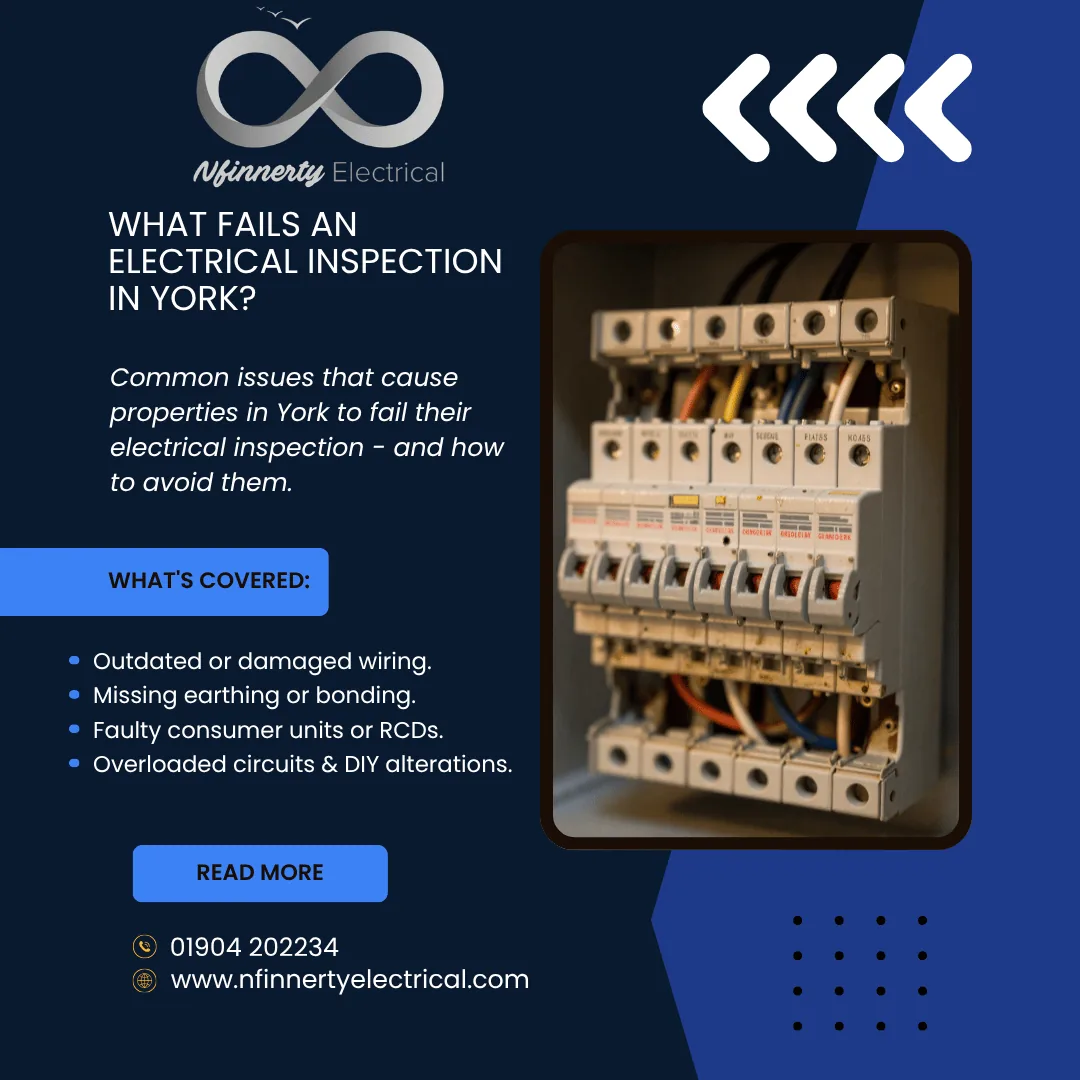
Consumer unit/fuse board: protection types,
heat signs, labels, and circuit arrangement.
Earthing and bonding: continuity and adequacy
for fault protection.
RCD/RCBO operation: correct function and trip
performance under test.
Wiring condition: ageing, physical damage,
exposed runs, and poor routing.
Sockets and switches: polarity, secure
mounting, and overheating evidence.
Lighting circuits: fitting condition, switching
safety, and protective suitability.
Higher-risk zones: bathrooms, kitchens,
outdoors, and ancillary areas.
Historic alterations: uncertified DIY additions
and hidden joints.
What the Results Usually Show
Reports should separate immediate hazards, potentially dangerous
issues, and lower-priority improvement items. That
prioritisation helps owners and landlords sequence repairs
sensibly.
The aim is not to create paperwork for its own sake. It is to
provide a technically clear route to a safer, more reliable
installation.
How Guidance Standards Shape the Checklist
A professional checklist is built around accepted technical
guidance, not guesswork. In practice, inspectors align findings
with BS 7671 expectations and supporting IET inspection/testing
guidance.
Protective measures: verification of earthing,
bonding, fault protection, and disconnection performance.
Inspection plus testing: measured results are
used to confirm safety, not visual condition alone.
Clear records: outcomes should be documented so
defects can be prioritised, tracked, and signed off after
remedial works.
Checks for Modern Home Technologies
Inspection scope usually expands where homes include newer
technologies or planned upgrades. This is especially important
in York properties with mixed-age wiring and boards.
EV charging readiness: confirm supply capacity,
protective-device suitability, and earthing arrangement before
installation.
Solar PV and battery storage compatibility:
confirm that existing distribution equipment and protection
strategy can support added generation/storage safely.
Additional protection review: discuss whether
further surge or arc-fault protection is appropriate for the
installation risk profile.
Reference basis: IET Codes and Guidance publications and BS 7671
resources for compliant inspection and installation practice.