
The Most Common Inspection Failures
Damaged sockets, switches, or accessories
Cracked faceplates, scorch marks, loose fittings, and signs of overheating are obvious red flags. They can expose live parts or indicate poor connections behind the accessory.
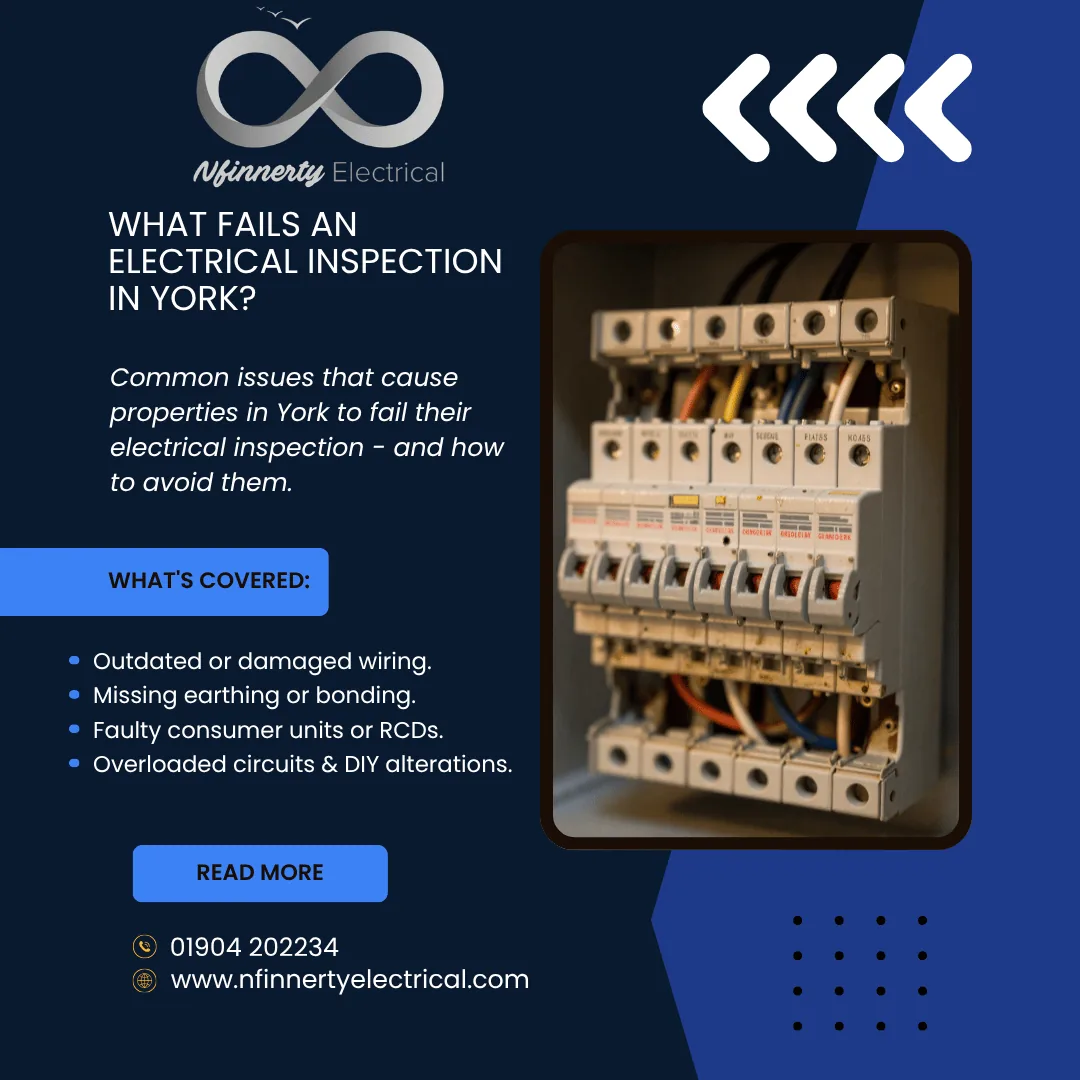
Missing or inadequate RCD protection
Older consumer units often lack the RCD or RCBO protection expected for modern safety standards. This is one of the most common findings on older domestic installations.
Poor earthing and bonding
If earthing or protective bonding is missing, undersized, or disconnected, the installation may not disconnect safely under fault conditions. That moves a report into a much more serious category.
Overloaded or badly altered circuits
Extensions, kitchen upgrades, loft conversions, and DIY additions can overload older circuits or leave them poorly coordinated with the protective devices at the board.
Unsafe DIY electrical work
Hidden junction boxes, mixed cable sizes, unlabelled additions, and uncertified alterations are common causes of failed inspections. They are especially common in older York housing stock.
Deteriorated wiring or outdated equipment
Ageing insulation, legacy fuse boards, and wiring that no longer meets current expectations often appear in reports even when the system still seems to work day to day.
What Counts as a Serious Failure?
Not every observation means the whole installation is dangerous, but some defects carry much more weight than others. Immediate shock hazards, overheating, exposed conductors, failed protective devices, or missing earthing arrangements are treated far more seriously than low-priority improvement items.
If an inspector identifies dangerous or potentially dangerous defects, remedial work should be planned quickly. The point of the report is to make the next steps clear, not just to produce paperwork.
That is why it helps to view an inspection as a risk assessment, not a pass-or-fail quiz. The report should explain what is unsafe now, what needs improvement, and what is simply worth monitoring.
Why Older York Properties Fail More Often
York has a large mix of period homes, older rentals, later extensions, and piecemeal upgrades. That often means one installation contains multiple generations of electrical work, some of it properly certified and some of it not. The result is a higher chance of mixed protection, outdated boards, and hidden alterations.
Even if the lights still work and sockets seem normal, the inspection may still uncover defects that only appear during proper testing. That is why relying on appearance alone is not enough.
What Happens After an Inspection Finds Problems?
Once defects are identified, the next step is to prioritise them. Some issues need urgent remedial work, while others are more about planned upgrades or compliance improvement. A good electrician explains the likely scope, urgency, and practical order of work so you can act without guesswork.