
Part P Electrical Rules Every Homeowner Should Know
Navigating electrical upgrades can feel overwhelming, but staying compliant with Part P and BS 7671 is essential for household safety and property value.
Navigating electrical upgrades can feel overwhelming, but staying compliant with Part P and BS 7671 is essential for household safety and property value.
Under Approved Document P in England and Wales, certain domestic electrical work must be notified to Local Authority Building Control. Non-compliance can create legal and financial risk long after the work is completed.
For the latest standards context, homeowners should ensure their electrician is working to current BS 7671 guidance and keeps up with IET updates, including official BS 7671 update notices and Amendment 4 information.
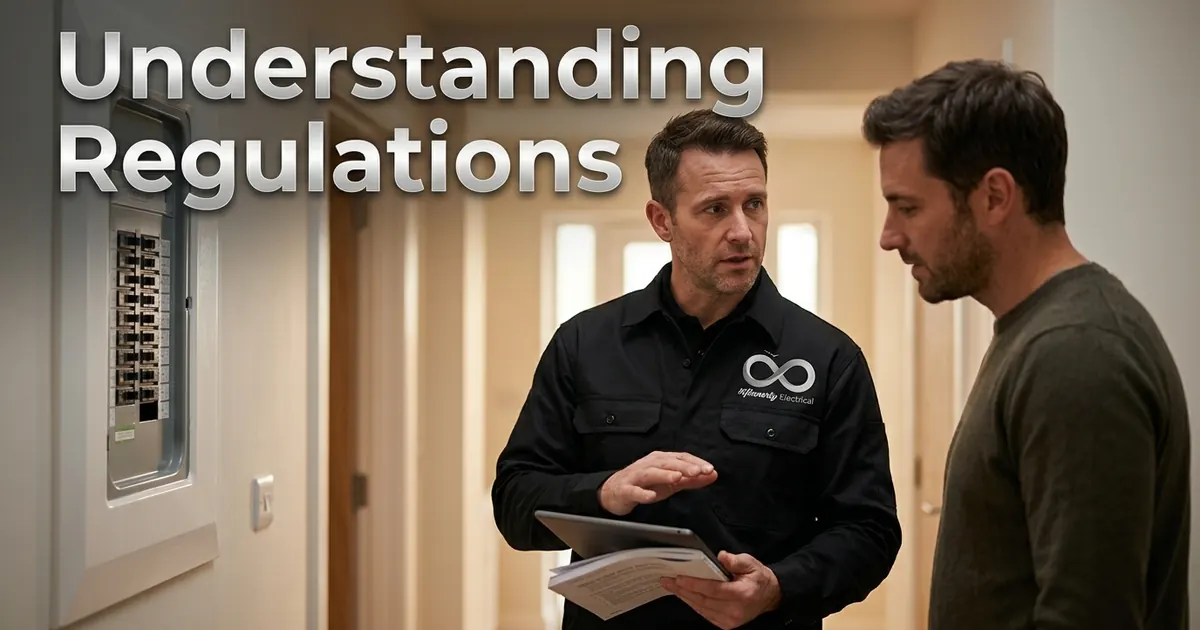
Part P was introduced so domestic electrical installations are completed and tested safely. It applies to fixed electrical installations in homes and places a legal duty on notifiable works to be properly documented.
Local authorities can require non-compliant work to be corrected or removed at the homeowner's cost.
Solicitors often request compliance documents for major domestic electrical work completed since 2005.
Uncertified electrical alterations may affect claims where a fire or fault is linked to the installation.
Not every task requires formal notification, but every electrical job must still meet BS 7671 safety requirements.
| Work type | Common examples | Requirement |
|---|---|---|
| Notifiable work | New consumer unit, full or partial rewire, new circuit for EV charger or shower, and work in special locations such as bathrooms. | Must be notified under Building Regulations and certified. |
| Non-notifiable work | Like-for-like replacement of sockets, switches, or light fittings; adding accessories to an existing circuit outside special locations. | No formal notification, but work must still be safe and BS 7671-compliant. |
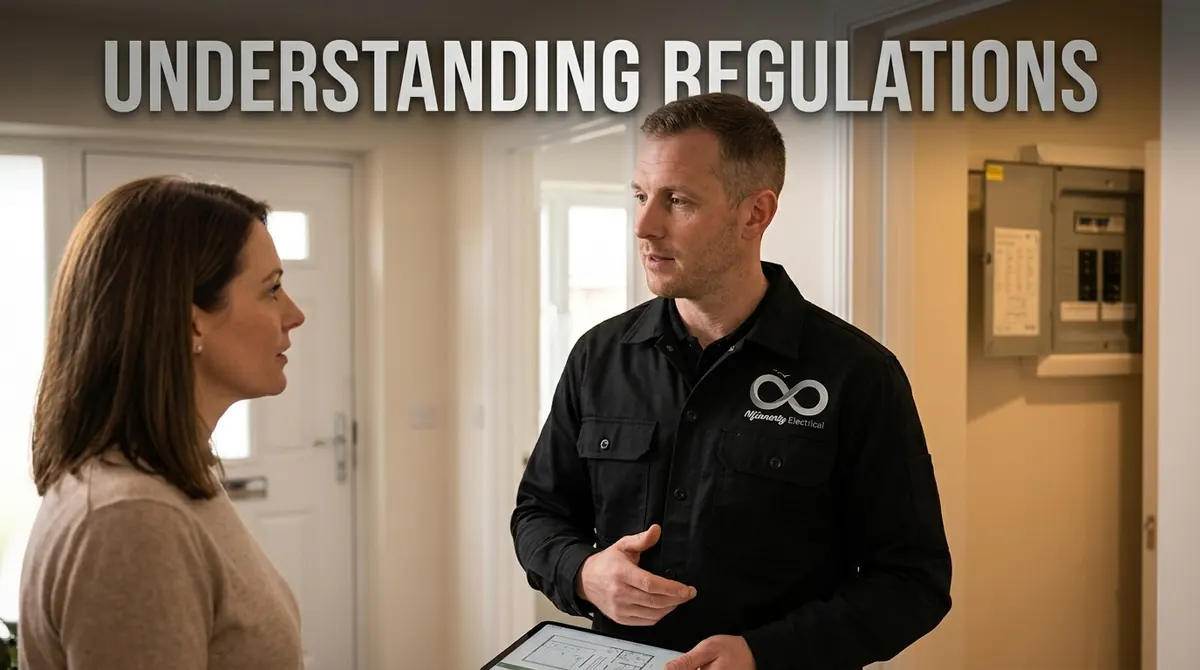
Homeowners generally have two routes:
For upgrades such as consumer units, EV circuits or rewiring, using a registered contractor usually gives the clearest compliance trail and fastest sign-off path.
Usually yes when like-for-like and outside special locations, but safe installation standards still apply and condition of existing wiring must be considered.
You should still request documentation appropriate to the work completed so there is evidence of testing, safety checks and workmanship.
Yes. Missing certificates or unresolved compliance issues can delay conveyancing and may require retrospective investigation.
Use a qualified, registered electrician who can confirm scope, testing, certification and notification responsibilities before work starts.
For independent regulatory and safety context, consult the current official guidance below. Requirements can change, and advice for a specific installation should be based on an on-site assessment.